One Team, One Brand: What SYNC Taught Us About Building Culture Through Strategic Events

By Imprint Events Group
3 min read
Aug 20, 2026
One Team, One Brand: What SYNC Taught Us About Building Culture Through Strategic Events
Knowing what someone does isn't the same as knowing who they are.
That single distinction sits at the center of every experience Imprint Events Group designs, and this year, we put it to the test on ourselves. As MC&A and Imprint Events Group took the next step together as one company, we didn't lead with an org chart or a memo. We led with an experience: SYNC, our annual company-wide gathering, reimagined as the moment two teams became one.
If you're evaluating event partners, leading culture strategy inside your own organization, or simply curious how a strategic event company approaches its hardest brief yet - its own team - here's what SYNC taught us, and why it matters beyond our four walls.
What Is SYNC?
SYNC is Imprint's annual company gathering, built around a simple framework: Strategy, Year-to-Date, Next, and Connection. It's designed to align a growing team around where the business is headed, celebrate what's been accomplished, and, most importantly, turn colleagues into a community.
In 2026, SYNC carried more weight than usual. A new org chart had just gone live. New names were on the roster. For the first time, MC&A and Imprint Events Group were in the same room, at the same time, as one company. The event itself became the proof point for our values: the people, relationships, and standards that define us remain the same, now backed by nationwide destination expertise, expanded creative and production, and deeper resources behind every experience we deliver.
Why Culture-Building Events Matter During a Merger
Mergers are won or lost in the details leadership can't put in a slide deck: trust, communication norms, and whether people feel like they belong to something bigger than their old team. Five priorities shaped SYNC's design, and they translate directly to any organization navigating growth or integration:
- Connection - Moving people from knowing of each other to actually knowing each other, which shortens conflict and speeds up collaboration.
- Trust - Built through shared experience and consistent follow-through, not assigned by title or tenure.
- Brand Conviction - Helping every person see themselves inside the company's point of view, not just its logo.
- Communication - Establishing a shared language and norms that outlast the week itself.
- Role Clarity - Making a new structure feel real through experience, not just an announcement.
This is the same lens Imprint brings to every client engagement: an event isn't a deliverable, it's a tool for solving a business problem.
The Strategic Thinking Behind the Experience
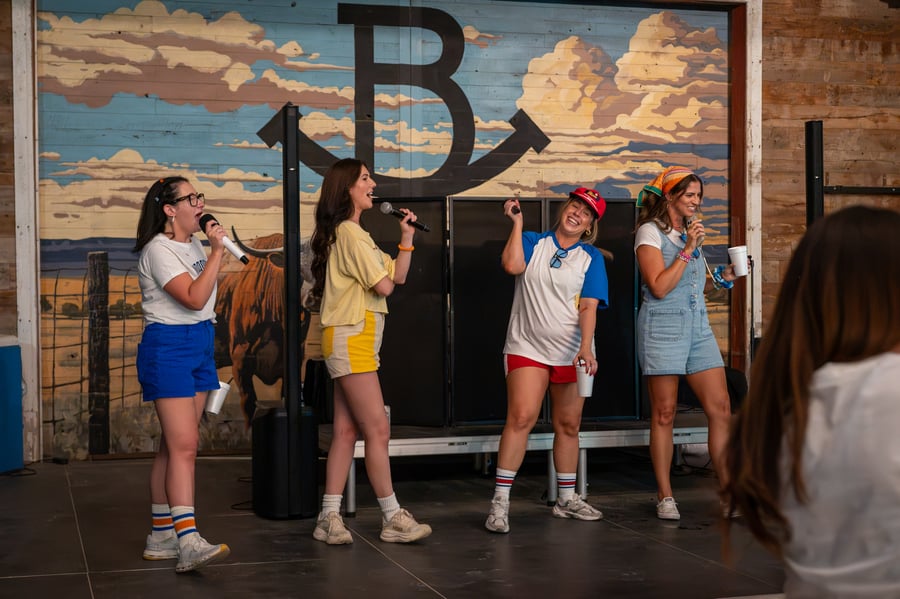
SYNC's 2026 setting - a Texas ranch built around the nostalgia and camaraderie of baseball - wasn't decor. It was the creative mechanism for the message. Baseball gave the week a shared vocabulary for teamwork, preparation, and the start of a new season, while the underlying SYNC framework kept the business priorities front and center.
That's the discipline behind every strategic event: theme in service of message, never the other way around. Beneath the setting, the outcomes stayed the same - alignment on vision, clarity on where the business stands today, and a clear-eyed look at what's next.
What This Means If You're Choosing an Event Partner
Plenty of event companies can execute logistics. Fewer can translate a business objective - culture integration, brand conviction, team alignment - into a physical, felt experience that changes how people work together on Monday morning. That gap is exactly where a strategic event company earns its place at the table.
If your organization is navigating a merger, a rebrand, rapid growth, or simply a team that knows what everyone does but not who they are, the same questions that shaped SYNC apply directly to your next gathering:
- What's the one shift you want every attendee to leave with - a change in how they think or act?
- Where does your current structure raise real questions people are too polite to ask out loud?
- What creative lens could carry your message instead of just decorating the room?
The Takeaway
A year from now, no one at SYNC will remember what was on the slides. They'll remember how it felt to walk in as two teams and walk out as one. That's not a happy accident - it's what happens when strategy, creativity, and production work together with a clear goal in mind.
That's the same standard we bring to every client we work with, in every city we work in.
Ready to turn your next company milestone into an experience your team actually remembers? Let's talk about what's possible.
Frequently Asked Questions
What is a strategic event company? A strategic event company designs experiences around a specific business outcome — such as culture integration, brand alignment, or team performance — rather than simply managing event logistics. The event becomes a tool for achieving a goal, not just an occasion.
How can companies use events to support a merger or acquisition? Well-designed gatherings give merging teams a shared, felt experience of the new organization — building trust and communication norms faster than internal memos or org charts alone. The most effective events target specific outcomes: connection, trust, brand understanding, communication, and role clarity.
What made SYNC 2026 different? SYNC 2026 marked the next step in MC&A and Imprint Events Group coming together as one company. It combined Imprint's SYNC framework (Strategy, Year-to-Date, Next, Connection) with a baseball-themed creative backdrop to align a newly combined team around a shared vision and identity.
Relevant posts

Subscribe to Our Blog
Related Posts
Every Element, One Moment: Jeffry Denman on Corporate Events
Sep 24, 2026
4 min read
Jeffry designs corporate experiences people carry with them - experiences that.
Imprint Events Group Becomes the Unified Mainland Brand for MC&A Operations
Jul 30, 2026
3 min read
Imprint Events Group Becomes the Unified Mainland Brand for MC&A Operations
Can a Corporate Event Have Both Purpose and Fun? Here's Proof It Can
Aug 4, 2026
3 min read
Short answer: Yes! Purpose and a good time aren't mutually exclusive - the mos.